
by Gertrud U. Rey
Epstein-Barr virus (EBV) is a common human herpesvirus that typically spreads through saliva and is known for causing infectious mononucleosis (i.e., “mono”). There is an established causal link between infection with EBV and the development of multiple sclerosis. Emerging evidence now suggests that EBV may also play a significant role in the onset of systemic lupus erythematosus, commonly known as lupus.
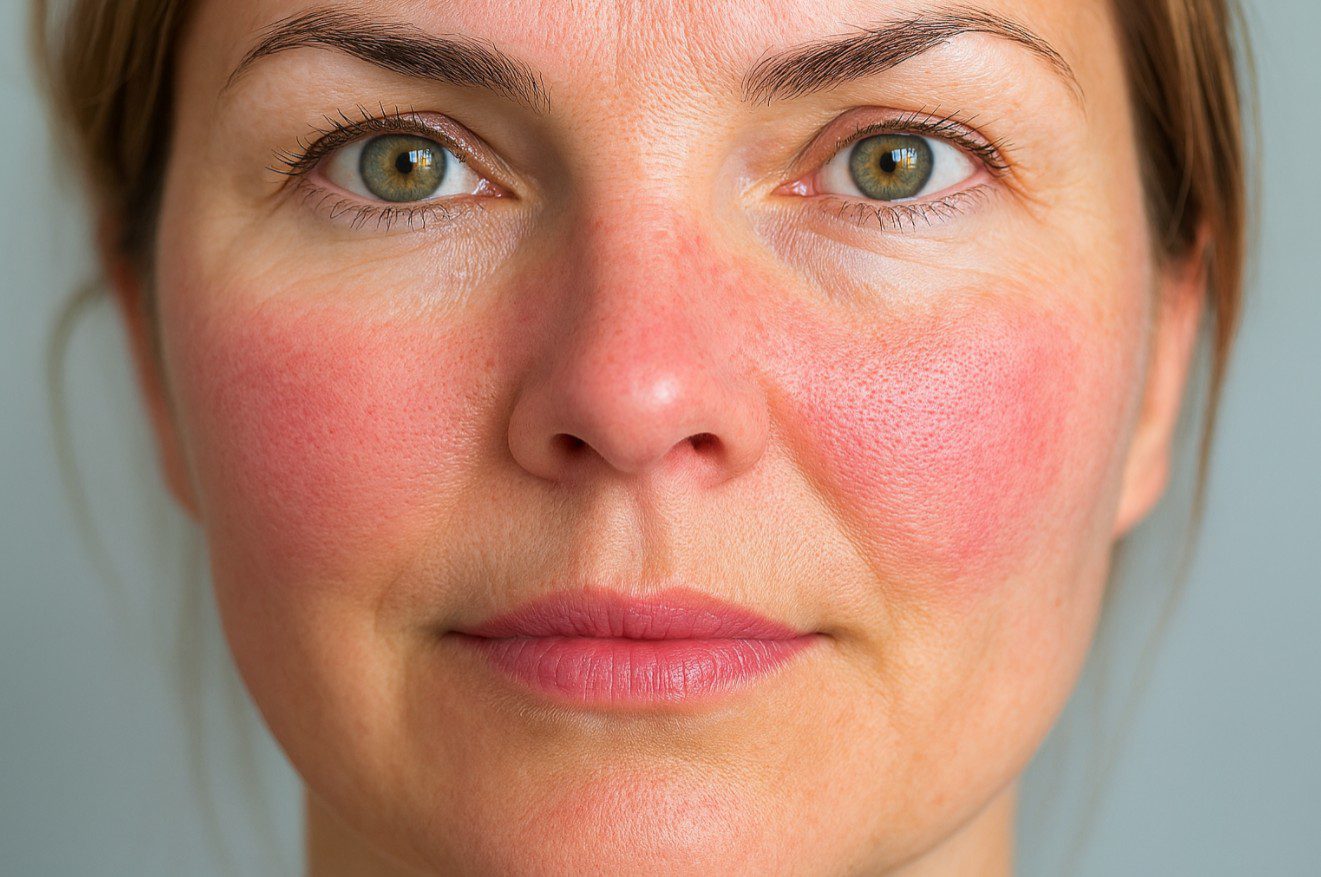
Photo credit: Vecteezy.
Lupus is a chronic autoimmune disease in which the immune system mistakenly produces self-reactive “autoantibodies” that attack the body’s own healthy tissues and organs. Compared to healthy people, individuals with lupus have higher rates of EBV infection and more frequent viral reactivation, especially during disease flares. Typical symptoms during a lupus flare include intense fatigue, joint pain, fever, headaches, and a characteristic butterfly rash (see image).
EBV infects both epithelial cells and B cells, the antibody-producing cells of the immune system. Once inside B cells, the virus establishes a lifelong, latent infection, transforming these cells into memory B cells that can persist in the body indefinitely. Although EBV-infected B cells are rare and difficult to detect in the blood, the authors of a recent study were able to isolate and analyze these infected cells from blood samples using innovative EBV-specific single-cell sequencing techniques. The study revealed that lupus patients had about 25 times more EBV-positive B cells in the blood compared to healthy control patients, confirming a strong correlation between EBV infection and lupus.
Further analysis revealed that EBV-infected B cells in lupus patients exhibit memory B cell characteristics and express genes linked to antigen processing and presentation. Remarkably, more than 60% of the antibodies produced by these cells in lupus patients were autoantibodies against nuclear antigen, and some also bound EBV proteins. This dual reactivity presumably enables EBV-infected B cells to present autoantigens to T cells, which in turn stimulate additional B cells, even uninfected ones, to produce more autoantibodies. In contrast, EBV-infected B cells from healthy individuals did not have features characteristic of antigen presentation, nor did they produce autoantibodies. Collectively, these findings suggest that in lupus patients, EBV-infected B cells can amplify autoimmunity by triggering a cascade of inflammatory immune responses.
At the core of this mechanism is Epstein-Barr nuclear antigen 2 (EBNA2), a viral protein that induces elevated concentrations of antibodies in the blood of lupus patients and functions as a key player in maintaining EBV latency. By integrating their sequencing results with previous evidence of EBNA2’s gene-binding activity, the authors discovered that EBNA2 drives the gene expression patterns that promote antigen presentation and memory B cell differentiation from EBV-infected B cells. In other words, EBNA2 acts as a molecular switch, reprogramming EBV-infected B cells into an autoreactive state that provokes lupus development and progression.
Considering that about 95% of adults are infected with EBV, why do so few people develop lupus? This rarity appears to stem from the extremely low probability of EBV infecting an autoreactive B cell in the first place– an autoreactive cell recognizes host nuclear antigens. Autoreactive cells encounter their target frequently, leading to repeated activation and triggering of a cascade of autoimmune events. In contrast, when EBV infects non-autoreactive B cells, the risk of lupus does not increase. Because EBV only rarely infects autoreactive B cells, most individuals infected with EBV will never develop lupus.
In addition to multiple sclerosis and lupus, EBV infection and reactivation have also been associated with other conditions, such as Sjögren’s syndrome, rheumatoid arthritis, and Long COVID. These associations highlight the potential value of an EBV vaccine, which would offer substantial benefits – even if administered later in life after initial infection – by suppressing viral reactivation and replication. This concept parallels the mechanism of action of the shingles vaccine, which may lower the risk of dementia by reducing reactivation of latent varicella-zoster virus. Similarly, the HPV vaccine appears to protect against cervical cancer even when given post-infection, also by reducing reactivation of human papillomavirus. The development of an EBV vaccine would therefore represent a highly anticipated advance in public health.
[The material in this blog post was also discussed in Catch This Episode 75, and on TWiV 1273.]