
by Gertrud U. Rey
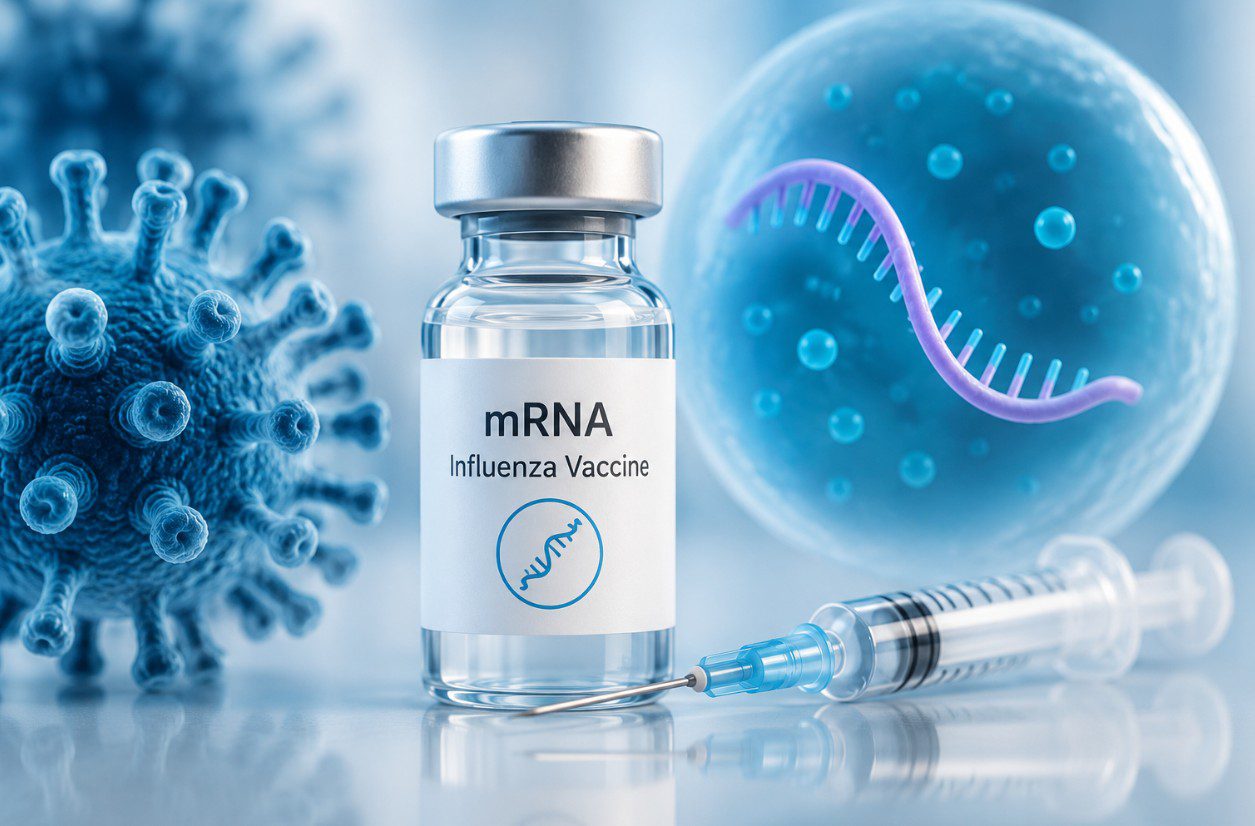
On June 18, 2026, the top advisory committee for the Food and Drug Administration (FDA) unanimously recommended Moderna’s new mRNA influenza vaccine, mRNA‑1010 (mFlusiva), for adults aged 50 and older. The vote marked the committee’s first review of a new vaccine application since 2023 and demonstrated strong support ahead of a final FDA decision, expected by August 5, 2026.
Most seasonal flu vaccines are manufactured by propagating influenza viruses in fertilized chicken eggs and then chemically inactivating the viruses. In contrast, mRNA‑1010 is based on the same messenger RNA (mRNA) platform that proved highly effective during the COVID‑19 pandemic. The flu vaccine consists of three mRNA molecules that encode two different surface hemagglutinin glycoproteins derived from influenza A (subtypes H1N1 and H3N2) and one hemagglutinin glycoprotein from the Victoria lineage of influenza B virus. Upon injection into a vaccine recipient, the mRNA molecules enter cells and are translated into the respective glycoproteins, which then trigger virus-specific immune responses. Because mRNA vaccines can be designed and updated within months, they can be more readily aligned with circulating influenza strains, potentially improving vaccine effectiveness from season to season.
The FDA’s recommendation is based on the results of a large Phase 3, double-blinded clinical trial published in The New England Journal of Medicine and Nature Immunology. The study enrolled over 40,000 adults aged 50 and older across 11 countries during the 2024–2025 flu season. The participants were randomly assigned to receive mRNA-1010 (20,350 recipients) or a licensed standard-dose inactivated influenza vaccine (20,353 recipients).
The key findings were as follows:
- mRNA‑1010 is 26.6% more effective at preventing influenza illness compared to the standard flu vaccine used in the study;
- recipients of mRNA‑1010 experienced fewer RT-PCR–confirmed influenza infections than those who received the standard-dose vaccine (2.0% versus 2.8%);
- mRNA-1010 stimulated a broader range of antibody-producing immune cells than traditional flu vaccines;
- mRNA-1010 induced long-lasting immune activity that continued to refine and diversify antibody responses for months after vaccination; and
- similar benefits were observed in a higher-risk group consisting of adults aged 65 and older.
The vaccine had a favorable safety profile, with no increase in serious adverse events compared to those observed after standard flu vaccination. However, mild-to-moderate side effects, including injection-site pain, fatigue, headache, and muscle aches were more common in recipients of mRNA‑1010. These effects were typically short-lived and similar to those reported after vaccination with COVID-19 mRNA vaccines.
There is ongoing misinformation surrounding mRNA vaccines, including false claims that these vaccines integrate into our DNA or increase the risk of cancer. In reality, over 13 billion doses of mRNA COVID-19 vaccines have been administered globally, establishing one of the largest bodies of safety evidence ever accumulated for a vaccine platform. There is no evidence to suggest that mRNA vaccines alter a recipient’s DNA in any manner, nor that they cause cancer.
Each year, influenza virus infects millions, hospitalizes hundreds of thousands, and claims tens of thousands of lives in the United States alone. Despite widespread vaccination efforts, traditional flu vaccines often provide inconsistent protection because effectiveness varies depending on how well the vaccine matches circulating strains. In that context, a 26.6% improvement in efficacy represents a meaningful advance toward more reliable seasonal protection. Moreover, the rapid production of vaccines better directed at circulating strains will be welcome. If mRNA-1010 becomes available in time for the upcoming flu season, I will gladly be first in line to receive it.