
by Gertrud U. Rey
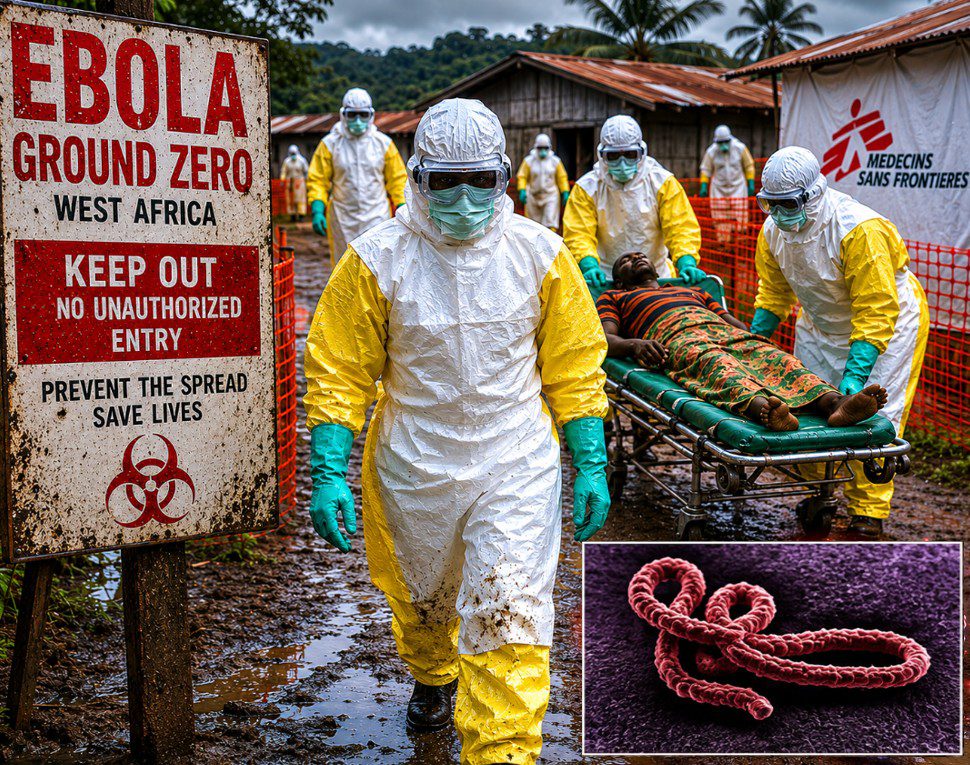
On May 17, 2026, the World Health Organization (WHO) declared a public health emergency of international concern in response to an Ebola disease outbreak in the Democratic Republic of the Congo (DRC). The situation is escalating rapidly, with over 300 confirmed cases and 48 deaths as of today, highlighting the severity of the public health crisis.
Unlike many prior outbreaks, this one is caused by Orthoebolavirus bundibugyoense, commonly known as Bundibugyo virus (BDBV), a less common member of the Ebolavirus genus. In humans, Ebola disease is known to be caused by four species. The most lethal is Orthoebolavirus zairense (common name, Ebola virus, EBOV) (formerly “Zaire ebolavirus”), which was first recognized in 1976 in what was then Zaire (now the DRC). Another species also arose in 1976 in Sudan, Orthoebolavirus sudanense, commonly known as Sudan virus. Finally, there is Orthoebolavirus taiense, commonly known as Taï Forest virus.
BDBV was first identified in 2007 in western Uganda. Although the DRC and Uganda have had more than 20 documented Ebola outbreaks, most were caused by EBOV, making this only the third known outbreak linked to BDBV. Scientists suspect that bats may be the natural source of the virus, but exactly how it first spread to humans is still unclear.
A common misconception about ebolaviruses is that they could become “airborne,” but this concern is largely unfounded. Although infection through inhalation of viral particles is theoretically possible, people do not become infected simply by breathing the same air as an infected individual. The virus primarily targets immune cells that circulate through the bloodstream and lymphatic system, rather than cells residing in the airway. Ebolaviruses do not replicate effectively in the upper respiratory tract, so an infected individual releases very little virus into the air when exhaling. Instead, transmission requires direct contact with infected bodily fluids like blood, vomit, and other secretions. Transmission most commonly occurs during care for infected individuals or through exposure to the bodies of those who have died from the disease. Because the virus already spreads effectively through close contact, there is little evolutionary pressure for it to become airborne.
Symptoms of Ebola virus disease typically appear between 2 to 21 days after exposure and often resemble those of common viral infections, including fever, fatigue, headache, sore throat, and muscle aches. As the illness advances, more severe complications like vomiting, diarrhea, organ damage, and hemorrhage may emerge. The disease is fatal in about 25% to 50% of cases.
Unlike for EBOV, there are currently no licensed vaccines for BDBV. Several experimental vaccines are under development, but these remain months away from clinical testing. Ervebo, a vaccine approved for EBOV, is also being considered for potential use, however, it is not authorized for BDBV, and evidence that it protects against this virus is limited and inconclusive.
There are likewise no approved therapies specifically for BDBV. Treatment is primarily supportive, focusing on maintaining hydration, managing symptoms, and providing intensive care when needed. Nonetheless, several therapeutic candidates have been prioritized for clinical evaluation, and these include the monoclonal antibodies MBT134 and Maftivimab, and the antiviral drug remdesivir. Maftivimab is the most potent component of the three-antibody cocktail Inmazeb, which was formerly called REGN-EB3 and was discussed in a previous post. Combination approaches, such as pairing a monoclonal antibody with remdesivir, are also being considered for further study.
Controlling Ebola outbreaks – especially in the DRC – has historically been challenging for many reasons. Cultural practices like caring for sick family members and traditional burial rituals that involve close contact with the deceased, can facilitate transmission. In addition, weak healthcare infrastructure, ongoing conflict and instability, and mistrust of authorities or public health efforts all complicate response measures. Attempts to contain outbreaks can also be strained by pressures on global public health systems. Changes in international support, including reduced funding for aid programs and shifting relationships with global health organizations make outbreak control more difficult. Continued vigilance, sustained investment in research, and strong international cooperation remain essential to managing this outbreak and preventing future ones.